
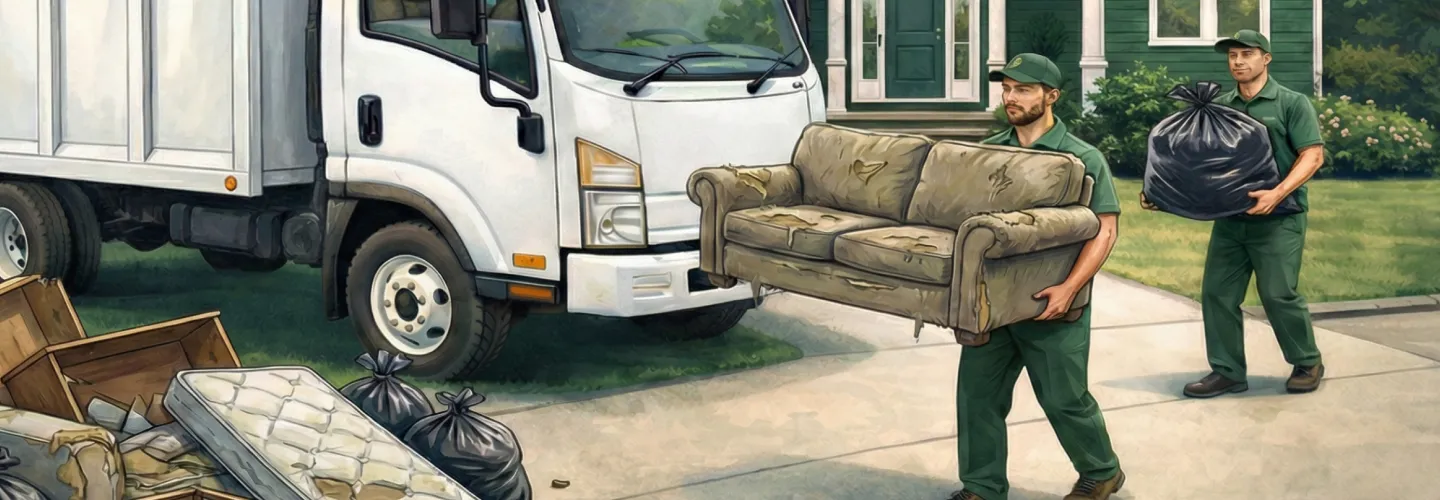
Concord Hoarding Cleanup Services
Choose our Hoarding Cleanup service for discreet, respectful, and thorough assistance that restores safety, comfort, and peace of mind to your home.
Get a Free QuoteOur Concord Junk Removal Services
Hoarding Cleanup in Concord, MA – Local Service Guide
Hoarding cleanup in Concord, MA requires a sensitive, thorough approach tailored to local needs. In neighborhoods like West Concord and Thoreau Hills, residential hoarding often involves large items—furniture, mattresses, or appliances—typically addressed during spring cleanouts, estate transitions, or after major life events. Local disposal options include donation centers, recycling facilities, and scheduled pickups, but access can be challenging in historic homes or during winter. For residential spaces such as garages, basements, and yards, seasonal drivers like flooding near the Sudbury River or heavy leaf fall in autumn prompt cleanouts. Commercial properties in Concord Center and along Route 2 face unique challenges: offices and restaurants may require discreet, after-hours service to minimize disruption, while property managers often coordinate large-scale removals. Specialty cleanups—foreclosure, estate, or construction debris—demand careful planning, especially when navigating Concord’s permitting and environmental guidelines. For more on local rules and resources, visit the official Concord city website.
Key Considerations for Hoarding Cleanup in Concord
- Timing cleanouts around seasonal weather and local events
- Securing necessary permits for large-scale removals
- Choosing proper disposal or recycling channels
- Ensuring property access for trucks and crews
- Managing high volumes and category-specific items
- Coordinating with local authorities and service providers
Benefits of Hoarding Cleanup in Concord
Professional Hoarding Cleanup Experts
Discreet and Compassionate Service
Fast Response Times
Thorough Sanitization and Odor Removal
Customized Cleanup Plans
Licensed and Insured Team
Coordinating Hoarding Cleanup with Concord’s Department of Public Works and Solid Waste Programs
Hoarding cleanup in Concord should be organized by separating materials into the correct municipal solid waste, recycling, hazardous-waste, mattress, paint, yard-waste, and construction-debris programs. Concord’s curbside Solid Waste Disposal and Recycling program is subscription-based, and collection day is assigned by street under the Route Schedule Alphabetically and the Route Schedules. Construction and demolition debris is not collected at the curb under Construction & Demolition Recycling. Special materials must be routed through the correct town program, including Recycling, Hazardous Waste Collection Program, Hazardous Waste Collection Events, Mattress Recycling, Paint Reuse & Recycling, Yard Waste Recycling, Disposal of Unwanted Medications, and Sharps.
Department of Public Works
133 Keyes Road, Concord, MA 01742
Phone: (978) 318-3240
Official Website: Department of Public Works
- Use the municipal curbside program for regular subscribed household trash and recycling
- Keep construction and demolition debris out of curbside collection
- Separate mattresses, electronics, paint products, sharps, medications, batteries, bulbs, mercury devices, yard waste, and hazardous materials before removal
- Bring fluorescent bulbs, rechargeable batteries, mercury fever thermometers, and thermostats to Concord Public Works at 133 Keyes Road during business hours under the town’s Recycling program
- Call Concord Public Works at (978) 318-3240 for material-specific disposal guidance
Understanding Concord’s Code Enforcement and Health Department Requirements for Hoarding Cases
Hoarding cleanup in Concord can trigger permit and access requirements when the work involves the public right-of-way, renovation, demolition, or other permit-related activity. Concord uses the online Permit Applications & Forms system for Building Inspection permits and asks applicants to allow at least 48 hours for review. Any disturbance or work within the public right-of-way requires a Right-of-Way and Driveway Permit. Concord lists right-of-way permit application fees from $50.00 to $200.00, with additional costs possible for road openings. Concord’s Construction Noise Bylaw allows non-public construction activity only between 7:00 AM and 8:00 PM on weekdays and Saturdays and between 8:00 AM and 6:00 PM on Sundays and listed holidays. The town lists the Health Department at 141 Keyes Road, Second Floor, phone (978) 318-3275, with office hours Monday-Thursday 8:00 AM-4:00 PM and Friday 8:00 AM-12:00 PM.
Code Enforcement Division
141 Keyes Road, 2nd Floor, Concord, MA 01742
Phone: (978) 318-3280
Official Website: Code Enforcement Division
Health Department
141 Keyes Road, Second Floor, Concord, MA 01742
Phone: (978) 318-3275
Official Website: Health Department
- Use the online Permit Applications & Forms system for permit-related work
- Allow at least 48 hours for permit review
- Obtain a Right-of-Way and Driveway Permit before occupying or disturbing the public right-of-way
- Schedule cleanup work within the hours allowed by the Construction Noise Bylaw
- Contact the Health Department for local health-related questions at (978) 318-3275
Complying with Massachusetts Solid Waste Laws and Recycling Mandates During Hoarding Cleanup
Hoarding cleanup in Concord must comply with the statewide MassDEP Waste Disposal Bans. Massachusetts bans disposal of cathode ray tubes, lead acid batteries, ferrous and non-ferrous metals, white goods, glass, metal, and plastic containers, recyclable paper, cardboard and paperboard, leaves and yard waste, mattresses, textiles, and treated and untreated wood and wood waste from ordinary disposal streams. The Commonwealth’s How & Where to Recycle page directs users to approved recycling options for electronics and other specific items instead of placing them in trash. Concord’s Mattress Recycling page covers mattresses and box springs, and Concord’s Hazardous Waste Collection Program and Hazardous Waste Collection Events cover eligible hazardous materials.
- Separate electronics, mattresses, appliances, batteries, metals, paper, cardboard, and yard waste from ordinary disposal loads
- Use How & Where to Recycle for electronics recycling guidance
- Use Mattress Recycling for mattresses and box springs
- Use Concord’s hazardous-waste programs for eligible hazardous materials
- Keep banned materials out of curbside and ordinary junk-removal loads
Ensuring Safe Handling and Worker Protection in Concord Hoarding Cleanup Operations
Hoarding cleanup should keep sharp, hazardous, and restricted materials separated from ordinary debris. Concord’s Sharps and Disposal of Unwanted Medications pages direct residents to the Police Department kiosk at 219 Walden Street. Sharps must be placed in a rigid, tight-sealing, capped container or a sturdy plastic receptacle. Loose needles, glass containers, and bags are not allowed. Concord’s Hazardous Waste Collection Program and Paint Reuse & Recycling pages also separate paint products, thinners, varnishes, specialty batteries, fluorescent lamps, and mercury-containing devices into specific disposal programs. If a cleanup includes refrigerant-containing appliances, EPA Section 608 prohibits intentional venting during servicing or disposal.
- Keep sharps in rigid, tight-sealing, capped containers or sturdy plastic receptacles
- Do not place loose needles, glass containers, or bags in the kiosk
- Keep paint products, thinners, varnishes, batteries, mercury devices, and fluorescent lamps out of ordinary debris loads
- Use the town’s hazardous-waste and recycling programs for eligible restricted materials
- Follow EPA Section 608 for refrigerant-containing equipment
What Neighborhoods Do We Serve Throughout Concord, MA?
- Concord Center: The same townwide rules apply for route-based collection, special-waste separation, permit requirements, and right-of-way access.
- West Concord: The same Concord programs apply for recycling, hazardous waste, mattresses, yard waste, sharps, and medications.
- Thoreau Hills: Cleanup loads should be sorted so construction debris, hazardous products, electronics, mattresses, and yard waste go to the correct program.
- Nashawtuc Hill: If trucks, dumpsters, or equipment affect the public right-of-way, a Right-of-Way and Driveway Permit is required.
- Barrett’s Mill: The same Concord rules apply for construction debris, hazardous materials, mattresses, recycling, and municipal curbside service.
- Nine Acre Corner: Residents and contractors should use the same townwide permit, recycling, hazardous-waste, and special drop-off programs.
- Emerson Gardens: Cleanup work follows the same collection rules, special-material separation requirements, and construction-noise hours as the rest of Concord.