
Concord Construction Waste Management Services
Choose our Construction Waste Management for hassle-free, eco-friendly disposal that keeps your project on schedule and your site compliant—experience the difference of a team dedicated to safety, sustainability, and customer satisfaction.
Get a Free QuoteOur Concord Junk Removal Services
Construction Waste Management in Concord, MA – Local Service Guide
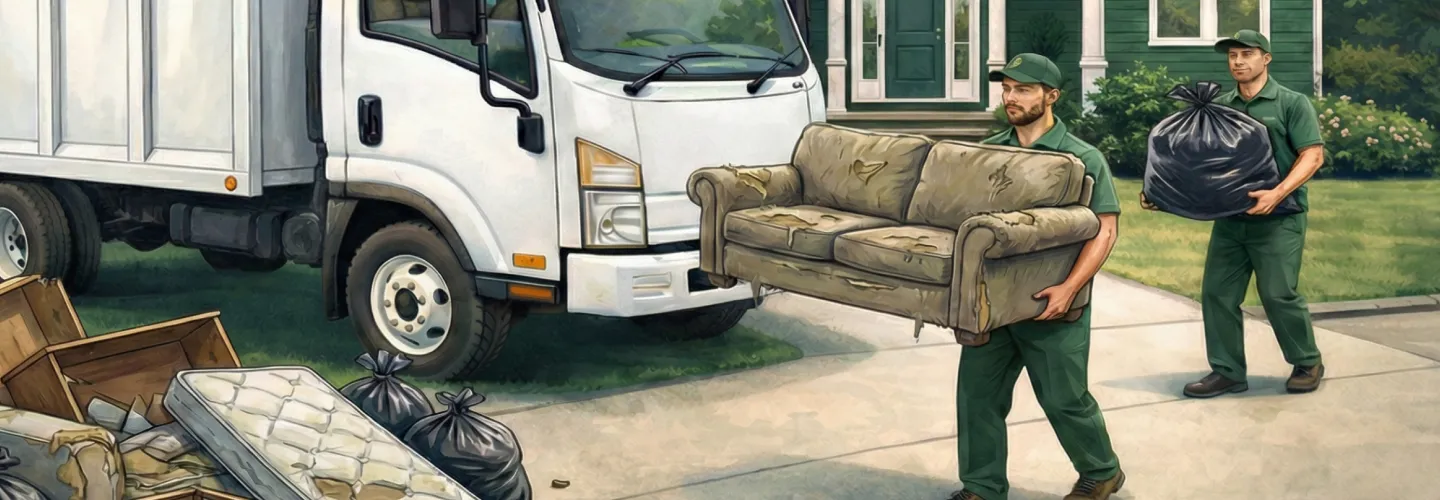
Effective construction waste management in Concord, MA, is essential for maintaining clean neighborhoods and meeting local regulations. Homeowners often need to dispose of residential items like furniture, appliances, or hot tubs during spring cleanouts, renovations, or after major life events. In areas like West Concord and Thoreau Hills, residents frequently schedule pickups for large items, especially after seasonal upgrades or weather-related damage. For residential spaces such as garages, basements, and yards, cleanouts typically follow storms or during fall and spring, when yard waste and debris accumulate. Flood-prone zones near the Sudbury River may require more frequent service due to water damage.
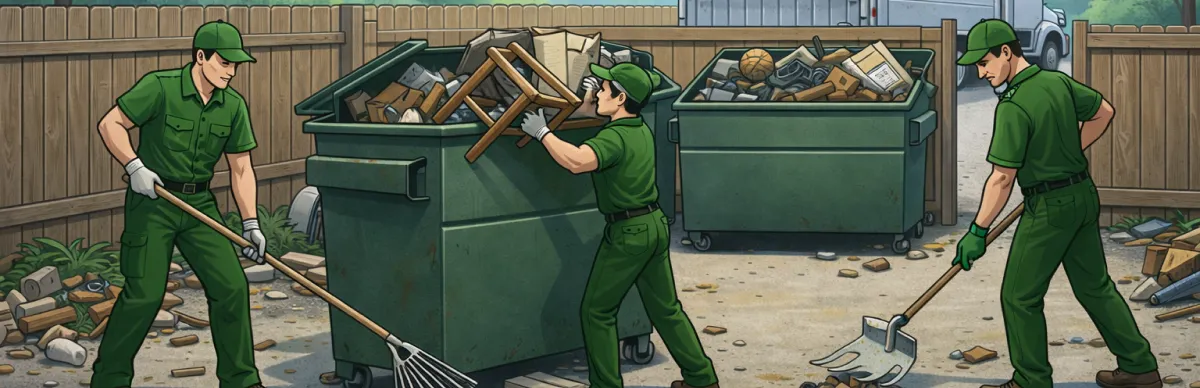
Commercial clients in Concord Center and Nine Acre Corner, including offices, restaurants, and retail spaces, face unique challenges. They often require discreet, timely waste removal to minimize business disruption, with higher volumes during renovations or tenant turnovers. Specialty services—like dumpsters for construction debris or estate cleanouts—are crucial for large-scale projects, foreclosures, or hoarding situations, demanding careful planning and coordination with local guidelines.
Benefits of Construction Waste Management in Concord
Efficient Waste Removal
Cost-Effective Solutions
Eco-Friendly Disposal
Regulatory Compliance
Improved Site Safety
Streamlined Project Timelines
Coordinating Construction Waste Disposal with Concord’s Department of Public Works
Effective construction waste management in Concord, MA should be coordinated through Concord Public Works and the Town’s Construction & Demolition Recycling guidance. Concord states that construction and demolition debris is not collected at the curb, and materials generated during construction projects should be separated and routed to appropriate recycling or recovery outlets. Concord also provides related recycling guidance through its Recycling and Hazardous Waste Collection Program pages.
- Construction and demolition debris is not collected at the curb
- Concord identifies wood, metal, asphalt, clean gypsum wallboard, brick, and concrete as construction materials with recycling opportunities
- Hazardous waste and other restricted materials must be handled through designated programs rather than mixed with construction debris
- Concord Public Works can be contacted at (978) 318-3240 for recycling and disposal guidance on special materials
- Related Town recycling programs cover mattresses, paint, Styrofoam, bulbs, batteries, and hazardous waste through separate municipal channels
Department of Public Works
133 Keyes Road, Concord, MA 01742
Phone: (978) 318-3240
Official Website: Department of Public Works
Understanding Concord’s Construction Waste Recycling Mandates and Landfill Bans
Concord’s construction-waste rules align with the Commonwealth’s MassDEP Waste Disposal Bans and the Town’s own Construction & Demolition Recycling guidance. Massachusetts bans disposal of several common construction materials, and Concord emphasizes recycling and reuse opportunities for these materials rather than landfill disposal.
- Asphalt pavement, brick, concrete, metal, wood, and clean gypsum wallboard are banned from disposal under Massachusetts rules
- Concord notes that asphalt shingles can be recycled into hot-mix asphalt for paving
- Concord states that drywall can be used in the manufacture of cement or gypsum wallboard
- Concord states that wood can be re-milled or recycled into particle board, mulch, furniture, and other wood products
- Concord states that concrete can be recycled into pavement aggregate, cinder blocks, and other products
- MassDEP states that both waste generators and haulers are responsible for complying with Massachusetts waste-ban requirements
For more information, refer to the MassDEP Waste Disposal Bans and the Town’s Construction & Demolition Recycling guidance.
Massachusetts Department of Environmental Protection
One Winter Street, Boston, MA 02108
Phone: (617) 292-5500
Official Website: Massachusetts Department of Environmental Protection
Navigating Permit and Code Enforcement Requirements for Construction Debris in Concord
Construction waste removal in Concord may involve multiple permit and code requirements depending on the scope of the project. Concord directs residents and contractors to the Town’s Permit Applications & Forms, Building & Inspections, and Right-of-Way and Driveway Permits resources for regulated work.
- Use the Town’s Permit Applications & Forms process for work that requires a building permit
- Concord states that building permit applications should be filed through the Town’s online permitting system and advises applicants to allow at least 48 hours for review
- Any disturbance or work performed within the Town’s right-of-way requires a Right-of-Way or Driveway Permit
- The Engineering Division requires an application, fee, pre-construction inspection, proof of liability insurance, payment of applicable fees, and an approved permit before right-of-way work may begin
- Concord’s Construction Noise Bylaw prohibits loud non-public construction noise before 7:00 AM and after 8:00 PM on weekdays and Saturdays, and before 8:00 AM and after 6:00 PM on Sundays and listed holidays
Building Department
141 Keyes Road, 2nd Floor, Concord, MA 01742
Phone: (978) 318-3280
Official Website: Building Department
Ensuring Safe Handling and Environmental Compliance for Hazardous Construction Materials
Proper handling of hazardous construction-related materials is essential for worker safety and environmental compliance in Concord. The Town’s Hazardous Waste Collection Program states that many hazardous materials should not be disposed of with regular household waste and provides designated local or regional outlets for restricted items.
- Oil- and alkyd-based paint, varnishes, finishes, removers, and thinners should be handled through Concord’s hazardous-waste or paint programs rather than mixed with regular construction debris
- Fluorescent bulbs may be taken to Concord Municipal Light Plant, Vanderhoof’s Hardware, or Concord Public Works at 133 Keyes Road
- Rechargeable batteries, button batteries, and specialty batteries may be brought to Concord Public Works during business hours
- Mercury fever thermometers, thermostats, and other intact mercury-containing devices may be brought to Concord Public Works
- Concord’s regional Hazardous Waste Collection Events require preregistration for eligible participants
Health Department
141 Keyes Road, Second Floor, Concord, MA 01742
Phone: (978) 318-3275
Official Website: Health Department
What Neighborhoods Do We Serve Throughout Concord, MA?
- Concord Center: Features historic buildings and narrow streets, requiring careful planning for debris removal and strict adherence to historic district regulations.
- West Concord: Mix of residential and light industrial properties; transfer station proximity allows for efficient waste drop-off, but commercial projects may require additional permits.
- Thoreau Hills: Predominantly single-family homes with larger lots, offering easier truck access but necessitating driveway protection during heavy equipment use.
- Nashawtuc Hill: Upscale residential area with private roads and HOA restrictions; advance notification and compliance with community guidelines are essential.
- Barrett’s Mill: Rural character with older farmhouses; potential for hazardous materials like lead paint or asbestos in demolition projects.
- Nine Acre Corner: Suburban neighborhood with a mix of new and older homes; access is generally good, but some streets may have parking limitations during construction.
- Monument Street Corridor: Historic estates and large properties; projects often require coordination with multiple agencies due to preservation and environmental considerations.